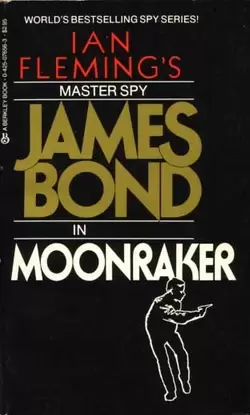
The world's most famous fictional spy seeks to protect England's newest weapon from an unknown threat in Moonraker, my introduction to the James Bond franchise.

As long-time INCspotlight readers are no doubt aware, I always have a soft spot for a particular work that gets me into a series or a genre as a whole, and Moonraker - a chance find at a local used bookstore when I was a kid - was my first real exposure to James Bond. Up until that point, I knew about Bond mostly from James Bond Jr. toy commercials and general cultural osmosis (maybe a scene or two I'd happen upon while Dad was watching one on TV). Other than that, I went into Moonraker with no actual knowledge of James Bond whatsoever, although I was curious to give the series a try. That alone earned this book a review, but given how few people seem to be aware of Fleming's original Bond novels, let alone have read them, this was also an opportunity to go explore the differences between the Bond of the books and the Bond of the films. But first, the obligatory background.
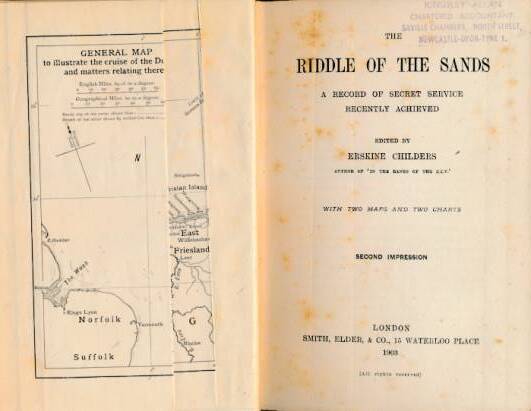
Spy fiction obviously didn't start with Bond, nor with his creator, Ian Fleming (1908 - 1964) - not by a long shot. The spy novel goes all the way back to at least the early 19th century, and got a major boost from The Riddle of the Sands (1903) by Robert Erskine Childers, which popularized some of the tropes we associate with the genre today. Herman Cyril McNeile's Bulldog Drummond series was a major influence on Fleming, who wanted his own spy fiction to have a similar feel to McNeile's. And, of course, there were the pulp novels and comic books of the 1930s and 1940s, which were chock full of secret agents of one kind or another. (Believe it or not, Fleming is rumored to have written the Bond novels at least in part as parodies of the spy fiction that had come before it.) However, for better or for worse, Fleming's iconic character has left one of the biggest footprints on the genre, if not the biggest.
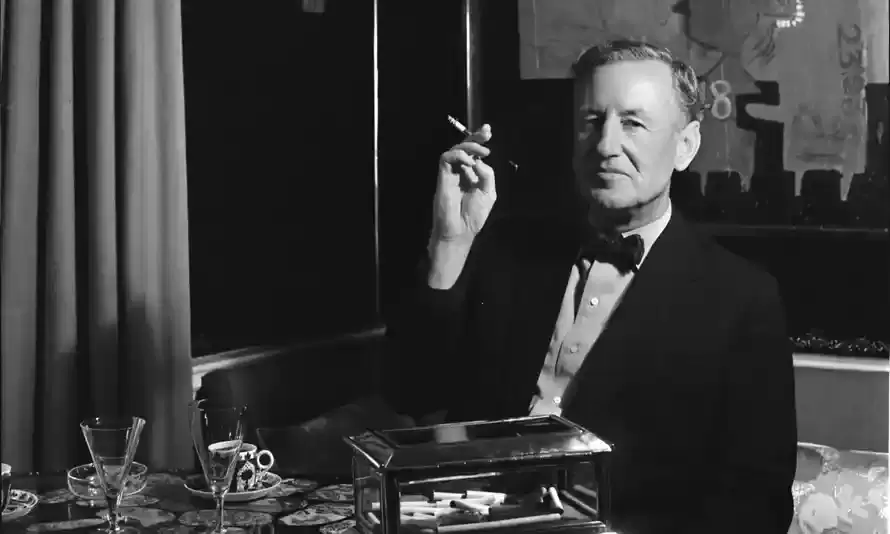
The story of Ian Lancaster Fleming (1908 - 1964) is not a rags-to-riches tale, as Fleming grew up wealthy and attended the finest schools, although his time at the Durnford Preporatory School was an unhappy one due to the harsh discipline the school employed. His father, Valentine Fleming, was a major in the Queen's Own Oxfordshire Hussars during World War I, and was killed in 1917 during a German bombardment - and his obituary was written by none other than Winston Churchill, a friend of the elder Fleming. Ian Fleming developed a wild streak while attending Eton, excelling at athletics if not academics, and his tendency toward driving fast cars and womanizing at the cost of his studies led to his removal from the school. (Fleming would give a similar background to Bond.) His mother sent him to study abroad, where he was encouraged to turn his imagination towards writing fiction. With such support, Fleming took his studies more seriously. He also had a doomed romance with a Swiss woman named Monique, who Bond's mother (of the same nationality) was named for.

After completing his education but failing his Foreign Office examination, Fleming became a journalist for Reuters in the early 1930s, making a name for himself with his coverage of the Metropolitan-Vickers espionage trial and his brazen attempt to get an interview with Joseph Stalin. However, the job didn't pay him enough for the lavish lifestyle he was used to, so he moved on to the banking world. Although he had a knack for charming clients, he found the job too boring, and wasn't all that good at the "making money" part of it. However, in 1939, the Foreign Office dispatched Fleming to Russia to help evaluate its military strength in the face of certain war in Europe. That same year, he became assistant to Rear Admiral John Godfrey, Director of Naval Intelligence. His duties varied from developing security collaborations with the United States to setting up commando units and duping the Germans into thinking the Allies planned to invade Greece and Sardinia instead of Sicily in 1943, an effort known as Operation Mincemeat. After the war, he went back to journalism, but his wartime experiences led him to try his hand at writing a spy novel.
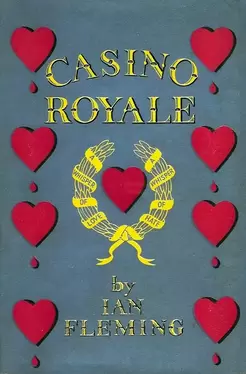
The first of the Bond novels, Casino Royale, was inspired by Fleming's 1941 visit to a casino in Portugal, after which he'd idly fantasized about his opponents at the card table being German agents. Seeing the promise in such a premise, Fleming was off to the races. The character of James Bond was intended to be a mere everyman caught up in events bigger than he expected, and was named for an ornithologist friend of Fleming's, as Fleming wanted the character to have as ordinary a name as possible, as opposed to the more outlandish names previously used in spy fiction. (This is also the joke behind Bond's "cover" as an ornithologist in the movie Die Another Day.) However, despite the glamorous depiction of exotic locations, beautiful women, fancy meals, and high stakes gambling, Bond's literary debut was a dark, cynical take on the spy genre, upending and even lampshading some already clichéd classic tropes, and the ending was particularly bitter - a surprising introduction to what became an escapist male fantasy series.
Casino Royale was both a commercial and critical success upon its 1953 publication, and Fleming followed up with Live & Let Die the following year, which met with similar success (although both books initially sold poorly in the United States). Moonraker was the third Bond novel, and Fleming decided it was time to develop Bond's character a little bit more (although we wouldn't get his full backstory until the 1964 novel You Only Live Twice), while keeping all of the action on British soil, the only time he would do so. Fleming eventually tired of writing Bond and killed him off in the fifth novel, From Russia With Love (1957), but quickly retconned his death in Doctor No (1958), which would be the first of the novels adapted for the big screen.
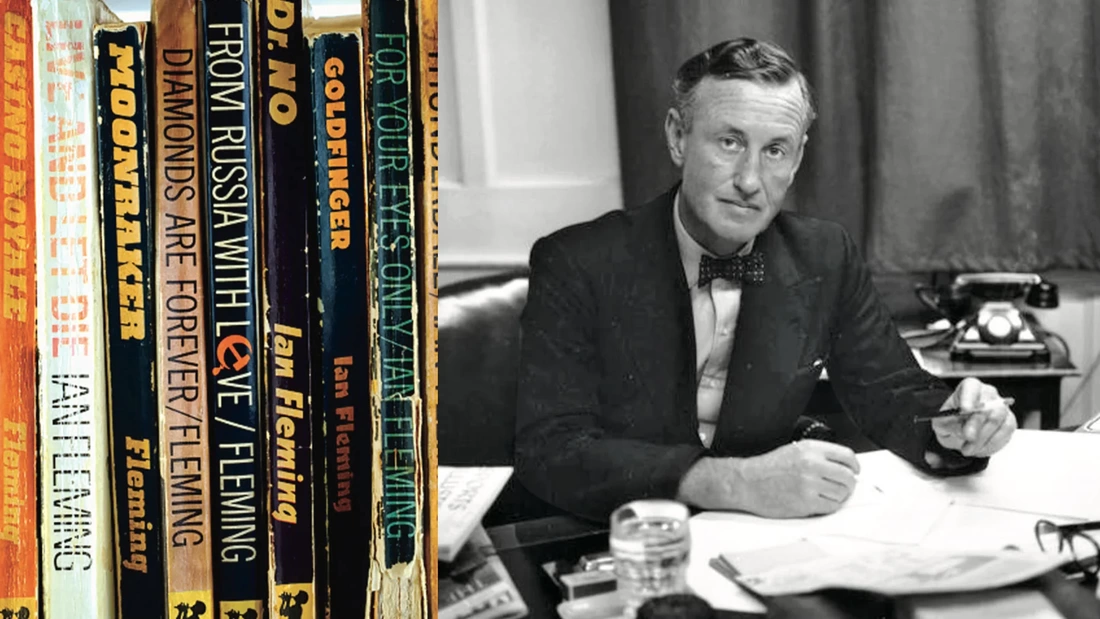
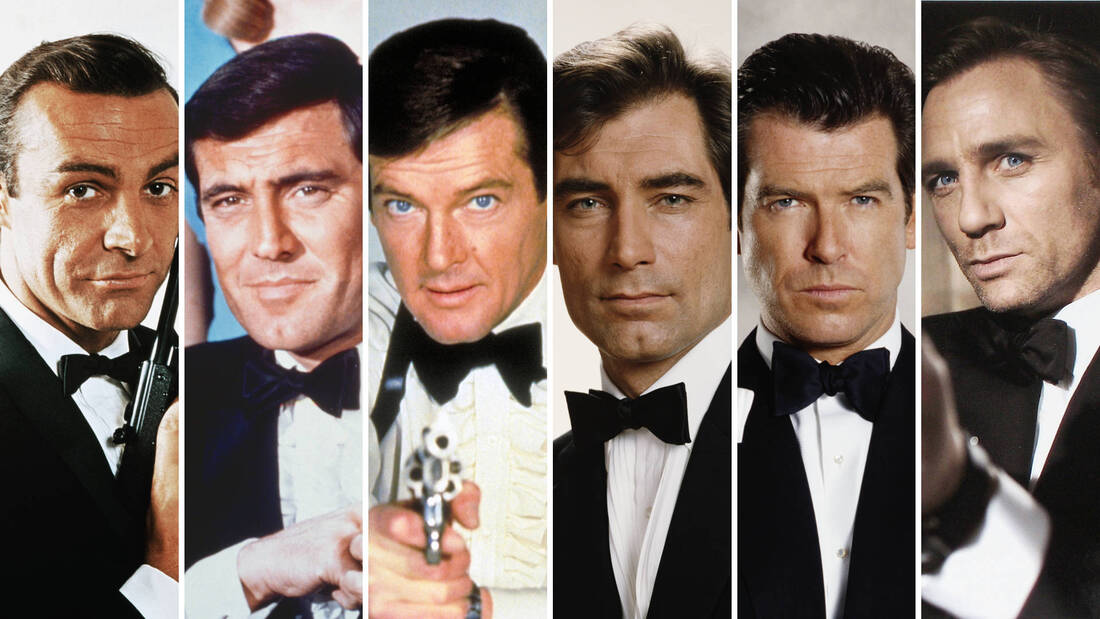
By the time Fleming died in 1964, he'd written fourteen Bond novels and two short story collections, as well as the children's novel Chitty Chitty Bang Bang (1964). Other authors have contributed to the Bond literary canon, with mixed results. Bond's most famous incarnation is, of course, a film series which has lasted for 25 films produced over a period of almost 60 years, not including the original Casino Royale (1967) or the Warner Bros. produced Never Say Never Again (1983), which was basically a not-as-good adaptation of Thunderball. Despite being overtaken by other franchises in recent years, the Bond series is still among the highest-grossing film series of all time, although lower on the list than it used to be. (The Marvel Cinematic Universe is the current front-runner by a very comfortable lead.)
WARNING: Here be MAJOR spoilers! Read further at your own risk!
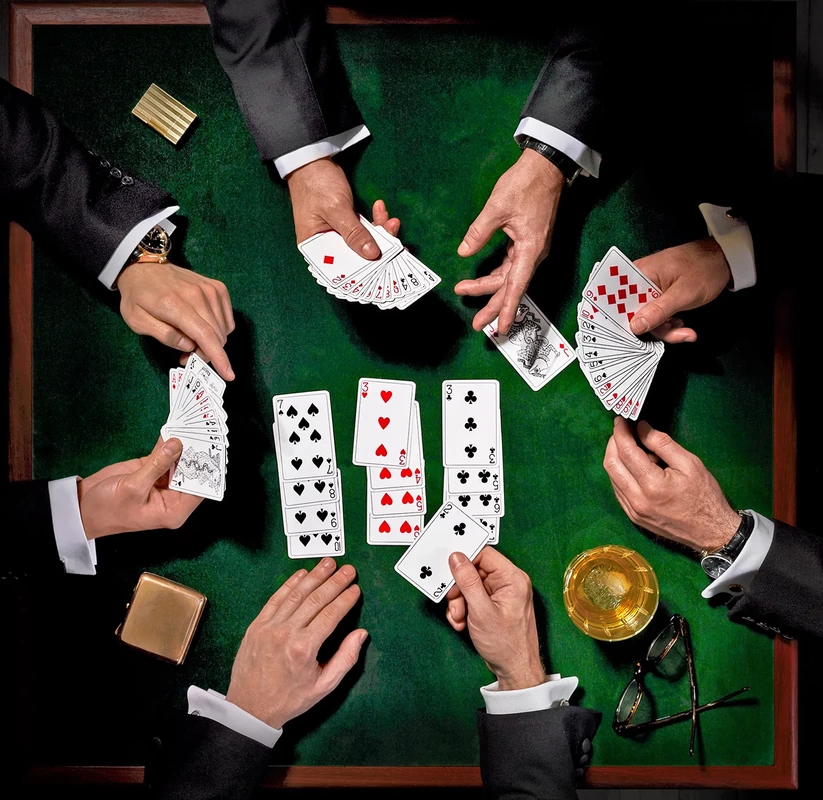
It's a typical day at the office for James Bond until his supervisor, M., calls him into his office for what turns out to be a rather awkward personal favor. M. regularly attends the same club as Sir Hugo Drax, an amnesic wealthy businessman and beloved national hero, wounded and scarred during World War II. Drax is developing a new weapon, the Moonraker, to protect England from her enemies, and there's going to be a test launch within the week. However, M. believes that Drax is also a card cheat, and he invites Bond to his club to discover how he does it and hopefully put a stop to it. Bond, who admires Drax and all he's accomplished, agrees to help out in order to avoid a devastating scandal that might threaten the Moonraker's upcoming test launch. It doesn't take long for Bond to discover Drax's methods, which he counters with a trick of his own, winning the game and a decent amount of cash to boot - cash Drax strongly advises Bond to spend quickly.
It's a typical day at the office for James Bond until his supervisor, M., calls him into his office for what turns out to be a rather awkward personal favor. M. regularly attends the same club as Sir Hugo Drax, an amnesic wealthy businessman and beloved national hero, wounded and scarred during World War II. Drax is developing a new weapon, the Moonraker, to protect England from her enemies, and there's going to be a test launch within the week. However, M. believes that Drax is also a card cheat, and he invites Bond to his club to discover how he does it and hopefully put a stop to it. Bond, who admires Drax and all he's accomplished, agrees to help out in order to avoid a devastating scandal that might threaten the Moonraker's upcoming test launch. It doesn't take long for Bond to discover Drax's methods, which he counters with a trick of his own, winning the game and a decent amount of cash to boot - cash Drax strongly advises Bond to spend quickly.
However, the next day, more Drax-related trouble pops up. Two of his men are dead, supposedly a murder-suicide for the sake of Gala Brand, Drax's lovely secretary (and secretly an agent of Scotland Yard's Special Branch). M. and other higher-ups smell shenanigans and are concerned about a possible attempt to sabotage the Moonraker ahead of the test launch. Despite Bond's misgivings about operating on English soil and intruding on Scotland Yard's investigation, he finds himself dispatched to Drax's headquarters to provide additional security. It's probably no surprise that the real threat is Drax himself, who is revealed to be a former Nazi agent now working with the Soviet Union to unleash the Moonraker's destructive power against England - as well as manipulate the stock market in the aftermath of the attack to enrich himself.
As I said earlier, when I first read the novel (I think in fifth or sixth grade), I knew nothing about James Bond other than he was a super-famous fictional spy (without really knowing what that entailed). After reading Moonraker, I tracked down more of the Fleming novels, and I'd read six of them by the time I saw my first Bond film, Doctor No. The opening chapter explaining Bond's regular routine was a fortuitous introduction to the character, and as mentioned earlier, it was Fleming's first time really delving into this kind of thing. What also sold me on the book was an obsession with all things playing card related since childhood, and my favorite section is the opening few chapters where Bond and M. play cards against Drax. However, once we get to the mission itself, the book starts off strong, but it got pretty exposition-heavy, which slows down the momentum of the story - a common problem with Fleming's writing style, I've since learned. There isn't much action in the novel, which initially surprised me - no shootouts with a horde of bad guys, no climactic physical confrontation between Bond and Drax. This isn't a criticism, but again, it wasn't what I expected.
In hindsight, having become more familiar with Bond in literature and on screen, I've gained new appreciation for the character of Gala Brand, who is also something of a standout among the literary Bond girls. When Bond first meets Brand, she responds to him without a hint of warmth or friendliness - and much to my surprise, instead of seeing this as a challenge, Bond inwardly praises (and is relieved by) her professionalism. Brand maintains that professionalism throughout the book, and she is consistently written as capable - just outmatched by her opposition, as is Bond himself. Yeah, he's thirsty for her, doesn't believe she's actually engaged, and they do share a kiss while out swimming one day. However, he never sleeps with her, and at the end of the novel, she tells him that she actually is engaged, and the two go their separate ways, much to Bond's sorrow. (In at least some of the novels, Bond tended to get more attached to the Girl of the Week than in the non-Craig films.)
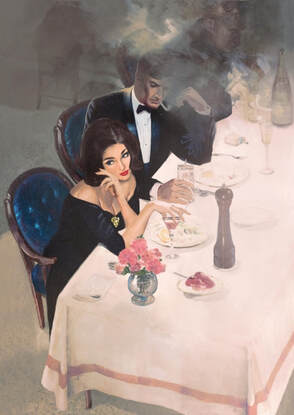
Illustration by Fay Dalton, from the Folio Edition of Moonraker
Moonraker not only offers the best of the literary Bond girls, but also the best of the literary Bond villains in Sir Hugo Drax. The first time I read the book, I actually wasn't sure if Drax would turn out to be the villain after all, given his moments of gregariousness. Intellectually, I saw it coming, but as a kid, charismatic villains pretending to be good guys wasn't something I'd seen a lot of yet, so there was some genuine uncertainty on my part. Drax is also hammier than some of Fleming's other villains, which makes him more theatrical, and that's always fun. Once the mask is off, though, he's a vile piece of work that you can't wait to see get his just desserts. Again, it's unfortunate there's no showdown between Bond and Drax, especially since Fleming writes Drax as someone who could probably give Bond a good fight if it came down to it. (Fleming wasn't one for drawn-out fight scenes, and he found rather anti-climactic ways for 007 to dispatch opponents that would be a challenge to defeat in open combat.) These days, however, I don't find Drax as much fun as I used to. A multimillionaire with boorish manners, immense popularity, and a Nazi background who is in cahoots with the Russians and working to undermine "his" country from within for the sake of vengeance and profit...it just sounds too...familiar.
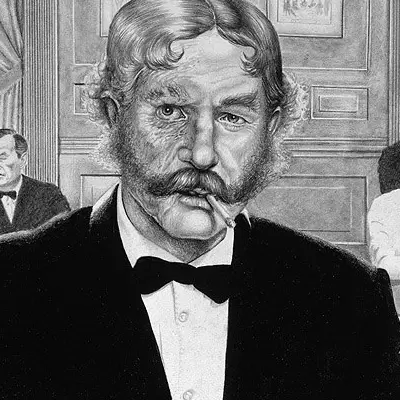
Illustration by George Almond
I feel like I should say more about the Bond of the books and how he compares to his cinematic counterpart beyond his depiction in this particular novel, as Moonraker is an excellent vehicle for such comparisons. Overall, as depicted in the novels, Bond feels more like an actual character than in the movies. He's typically much less of a maverick and more of a serious professional, and he'd likely be horrified by what the movie version of him gets up to. For example, in the film adaptation of On Her Majesty's Secret Service, for example, Bond is relentlessly pursuing Blofeld, much to the disapproval of his superiors. In the novel, it's M that insists he continue the hunt for Blofeld over Bond's objections, deeming him no longer a threat. (The short story For Your Eyes Only even has Bond dispatched on a personal mission of vengeance by M. after some friends of M. are murdered, something Bond is very uncomfortable about.) More than once, M. sends Bond on missions that Bond thinks are beneath him or a waste of his time, but he follows his orders - only to find himself facing a more serious danger than he anticipated.
Beyond his professional conduct, there are other strong differences between Bond in the books and the movies. In the novels, there are no smooth quips or one-liners before or after dispatching an enemy, and the reactions to potential collateral damage are very different. The movie version of Bond would go "Ah, you're planning on killing millions of people to line your own pockets. Another vodka martini, please." The literary Bond, however, was never cavalier about that sort of thing, reacting with shock or horror to a villain's plan to slaughter thousands to achieve their end. On the other hand, while the Bond of the novel isn't as much of a horndog, he's certainly just as much of a misogynist sexist, if not more so, and is guilty of other bigotries as well. He arguably qualifies as a villain protagonist for this alone, particularly in Casino Royale.
Beyond his professional conduct, there are other strong differences between Bond in the books and the movies. In the novels, there are no smooth quips or one-liners before or after dispatching an enemy, and the reactions to potential collateral damage are very different. The movie version of Bond would go "Ah, you're planning on killing millions of people to line your own pockets. Another vodka martini, please." The literary Bond, however, was never cavalier about that sort of thing, reacting with shock or horror to a villain's plan to slaughter thousands to achieve their end. On the other hand, while the Bond of the novel isn't as much of a horndog, he's certainly just as much of a misogynist sexist, if not more so, and is guilty of other bigotries as well. He arguably qualifies as a villain protagonist for this alone, particularly in Casino Royale.
Another thing makes Moonraker such a noteworthy book for comparing the books to the movies is the opening chapter that shows a typical day in the life of James Bond - and it's probably not what you think. It turns out he spends a vast majority of his time on the job behind a desk, working regular office hours and dealing with routine paperwork, earning a rather modest government salary. The Double-O branch even has its own secretary, originally Loelia Ponsonby before she's replaced by Mary Goodnight (far more capable and professional in the books than in The Man With the Golden Gun), and it's Ponsonby and Goodnight that Bond flirts with instead of M.'s own secretary, Miss Moneypenny. It's only once or twice a year that he'll get an assignment that requires his particular skill set as a double-O, and while he may not like killing, he does enjoy the risk and danger of these jobs. He expects to one day be killed in action and intends to leave little, if anything, left behind when he dies, which accounts for his indulgent habits.
In some ways, I can understand how the James Bond of the movies has way the hell overshadowed his literary counterpart, to the point where I know people who are surprised that Bond novels exist, let alone precede most of the films. They're nowhere near as flashy or escapist as their cinematic adaptations, and they can be rather heavy on exposition and light on action. And yes, they are indeed chock-full of racism, ethnocentrism, sexism, anti-Semitism, and anti-LGBTQA bigotry. Plus, the cold-hearted professional, especially in the early books, makes him a difficult protagonist to like.
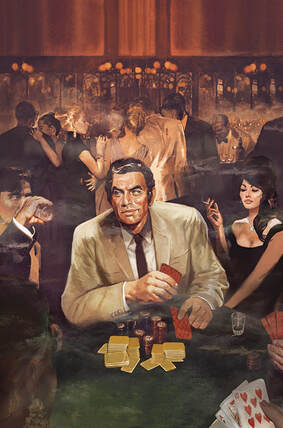
Moonraker was a smash success upon its publication, with many - including playwright and Fleming friend Noël Coward - declaring it to be Fleming's best Bond novel so far. (However, there were complaints about the whole book taking place on English soil and not offering any exotic locations, which was part of the appeal for many readers.) The book's American release under the title Too Hot to Handle, which Americanized many British idioms, was also a commercial success. As for me, I liked what I read enough to have gone on to read the rest of Fleming's Bond novels and most of the short stories, and even a few by other authors - John Gardner (whose work I have mixed feelings about) and part of one by Raymond Massey, which I couldn't get through. Fleming's voice as a writer is just too distinct, and it doesn't help that Gardner and Massey seem to draw more from the movies than Fleming's novels, even though they follow the continuity of the books. I've also seen almost all of the Bond movies, with Live & Let Die remaining the only film in the series I've never seen in its entirety - I've tried to get through it twice, but the racism is just too cringeworthy. I've also played a number of the video games, although I've never been able to beat any of them (yet).
I suppose I should talk about the 1979 film adaptation, although I'd really rather not - at least not more than I have to. Like many of the post-Connery Bonds (and even a couple of Sean Connery's later outings), it was an adaptation in name only, keeping the name of the villain and one of the death traps, but nothing else, in part because the original premise was out of date, and in part because of Star Wars being a huge hit. It was so far removed from the novel that I couldn't get into it as a kid. I've since gotten off my high horse about that sort of thing, but I still think it's one of the weaker Bond movies, not to mention an inferior clone of the previous film, The Spy Who Loved Me - the best of the Moore Bonds. I'm apparently not alone in that assessment, which didn't stop Moonraker from being the highest-grossing Bond film until 1995's Goldeneye, the first Bond movie I saw in theaters. If you want to see an in-depth look at where this movie went wrong, I refer you to Mathew Buck's Bad Movie Beatdown review. (Yes, that's how his name is spelled.) Later Bond films would have various references to the novel Moonraker, from Kamal Khan's "spend the money quickly, Mr. Bond" threat in Octopussy to the plot and villain of Goldeneye. Die Another Day's Miranda Frost (Rosamund Pike) was originally going to be named Gala Brand, but given the direction they took the character, I'm glad they didn't do that.
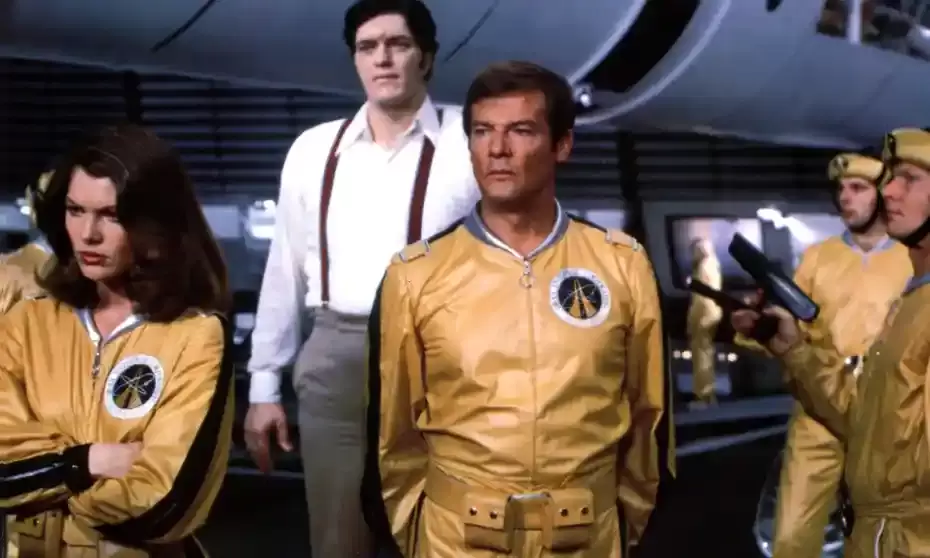
If you're a fan of the Bond films but haven't given the books a try, or you want to see how different the literary James Bond is from his cinematic counterpart, this isn't a bad way to start. If you're completely unfamiliar with Bond, this is a solid introduction, although there may be some culture shock if you get to the films. Either way, give it a read and see what you think.
 RSS Feed